Congratulations, you bought a boat. Now the boat is going to teach you a few things, and it likes to teach them at the worst possible moment: a dead battery on a Saturday morning, a generator that won't start on the hottest day of the year, or a seacock that won't close when you really need it to.
The good news is that you can skip most of these lessons. Each item below takes a few minutes a month, and every one of them is cheaper than finding out the hard way.
1. Batteries
If your boat has flooded lead-acid batteries, check the fluid level every month. Top them off with distilled water, just enough to cover the plates. Tap water has minerals that shorten battery life. Check the terminals for corrosion and make sure the connections are tight. AGM and lithium batteries are sealed and never need water, so know which type you have before you open anything.
2. Seacocks
Seacocks are the valves on the through-hull fittings below the waterline. If they're never moved, growth and corrosion can lock them open, and you'll find out when you need to close one in a hurry. Open and close each one a few times every month or two. Tie a correctly sized wooden plug to each through-hull so it's within reach if a hose or fitting fails.
3. Engines and generator
Engines that sit wear out faster than engines that run. Start the main engines and the generator at least once a month for 10 to 20 minutes. Idling alone isn't enough, so bring them up to operating temperature. Put the generator under a real load by running the AC or the water heater.
The main engines are harder to load while tied to the dock, so the best way to exercise them is to take the boat out for a short run every so often. Diesels that run lightly loaded build up unburned fuel and carbon, a problem called wet stacking. While they run, confirm water is coming out of the exhaust, and check the oil, coolant, and belts.
4. Safety equipment
Flares expire 42 months after the manufacture date stamped on them. Once they expire, they no longer count toward Coast Guard requirements. At least once a season, check the pressure gauges on your fire extinguishers and look over your life jackets. Inflatable life jackets need their CO2 cartridges checked. If you carry an EPIRB, check its battery date and keep its registration current.
5. Racor fuel filter/water separators
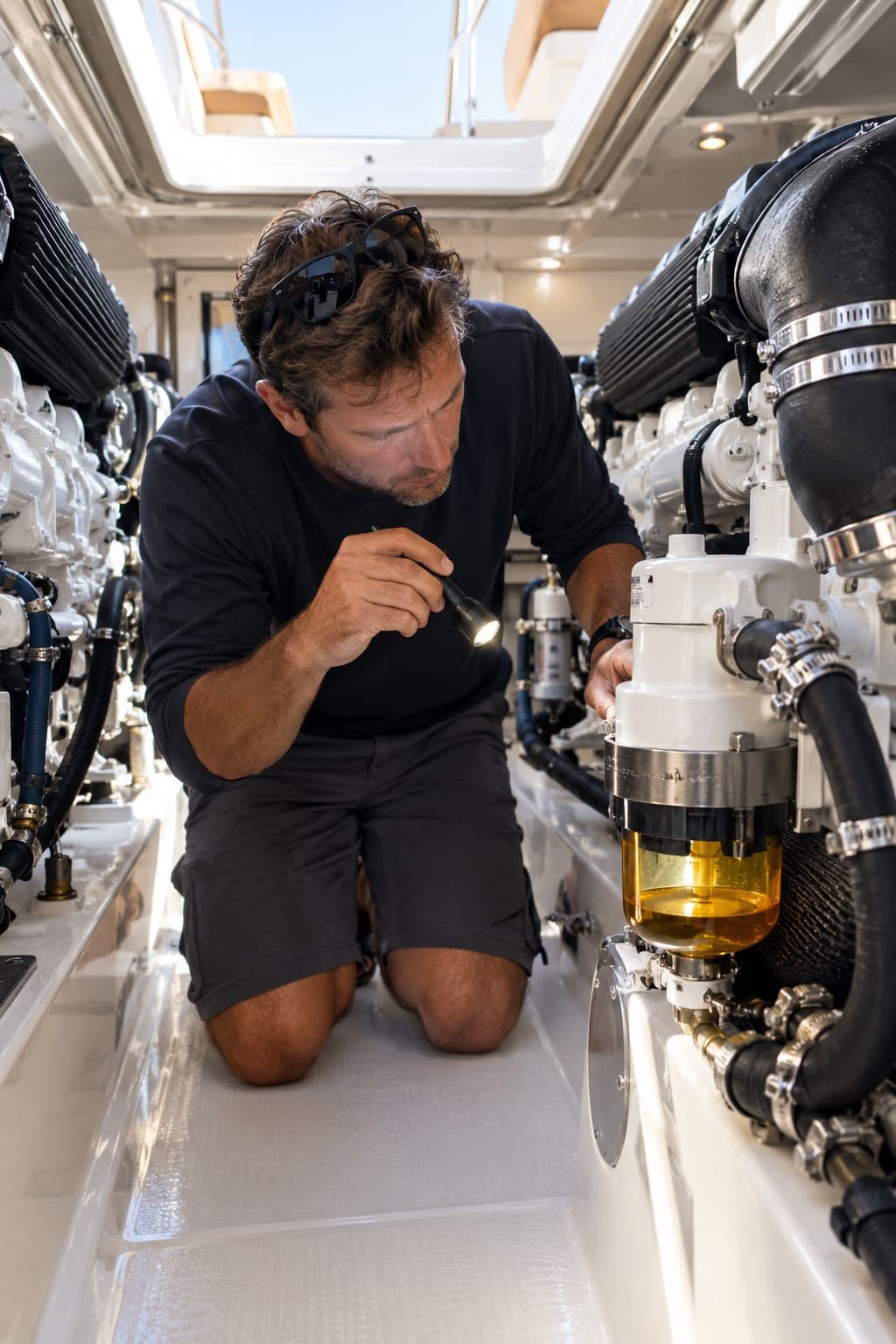
Your Racor filters catch water and debris before they reach the engine. Look at the clear bowl at the bottom of each filter regularly. Clean diesel is a clear amber color. If the fuel in the bowl looks milky or cloudy, or you see a layer settled at the bottom, that's water, and it's time to drain it. Replace the filter elements on schedule and keep spares aboard. A clogged fuel filter is one of the most common reasons an engine quits underway.
6. Bottom paint, cleaning, and zincs
Antifouling paint slows marine growth, and it usually needs to be redone every one to two years. Between haul-outs, a diver should clean the hull regularly. In warm Southern California water, monthly is common. A fouled bottom costs you speed and fuel and makes your engines work harder.
Zincs are sacrificial anodes. They corrode so your propellers, shafts, and running gear don't. Replace them when they're about half gone, and ask your diver to report on them after each cleaning.
7. HVAC
Marine air conditioning uses seawater to cool the boat. Run it periodically, even in mild weather, to keep the pump primed and the seals from drying out. Clean the raw water strainer, and confirm a steady stream of water from the overboard discharge. A clogged strainer is the most common reason a marine AC unit shuts itself off.
8. Holding tank
Pump out before the tank is full. An overfilled tank can push waste into the vent line, which causes clogs and odors and can damage the tank or hoses. Keep your tank treatment topped off and use toilet paper made for marine systems.
9. Bilge pumps and float switches
Your bilge pump is your last line of defense, and it only works if the switch does. Lift each float switch by hand to confirm the pump kicks on. Clear any debris around the pickup and test the high-water alarm if you have one.
10. Raw water strainers and impellers
Your engines and generator pull seawater through strainers and pump it with rubber impellers. Clean the strainers often. Impellers wear out and should be replaced about once a year, sooner if the engine ever runs dry. Keep a spare impeller aboard for each engine and the generator.
11. Shore power cord and connections
Look at both ends of your shore power cord for discoloration, melting, or burn marks. Loose or corroded shore power connections are a common cause of fires on docked boats. Replace a damaged cord or plug right away.
12. Hoses and clamps below the waterline
Check every hose below the waterline for cracks or soft spots. Clamps should be stainless steel, free of rust, and doubled where possible.
Keep a log
The owners who stay ahead of maintenance keep track of it. Write down what you checked, when you checked it, and what you found. KEEL Works puts these items on a schedule for your boat and reminds you when each one is due, so nothing slips while you're out enjoying the water.